
How IPS International School of Wrocław let student voice, not guesswork, steer wellbeing support
{{centre}}
How IPS International School of Wrocław let student voice, not guesswork, steer wellbeing support
For this case study, the Komodo Team spoke with Ruan van Niekerk, IPS Academic and Exam Prep Centre Manager
{{justify}}
{{centre}}

{{justify}}
Introduction
IPS International School of Wrocław was established in 2011 by Magdalena Dobrzańska-Frasyniuk, inspired by her search for the best possible education for her child. Since then, the school has grown into a thriving international community of more than 500 students, aged 2.5 to 18, across two campuses in Wrocław, Poland. In September 2026, IPS will expand to Rzeszów with the opening of two new campuses: a kindergarten campus and a primary and lower secondary school campus.
PS offers an international education that incorporates the International Baccalaureate Primary Years Programme and Cambridge programmes, while also meeting the requirements of the Polish national education system. English is the main language of instruction, and the school is home to students and staff representing more than 40 different cultures.
Student wellbeing and pastoral care are central to the school’s approach. IPS has a dedicated team of counsellors, psychologists, special education teachers and speech therapists who work closely with students, families and teachers to ensure that every student feels safe, seen and supported. Multiculturalism, diversity and wellbeing are at the heart of the school’s identity.
{{justify}}
The challenge
Before Komodo, IPS relied on a paper-based wellbeing check system. It gave students a way to flag when they needed help, but issues surfaced only once a student chose to raise them, and there was no reliable way to see a struggle building before it became too late.
Ruan van Niekerk, IPS Academic and Exam Prep Centre Manager, explains what the school was looking to change: "We wanted to have a proactive system where we could actually indicate any struggles or any need before it actually arises."
The paper format also made it easy for students to sidestep questions they didn't want to answer, leaving gaps in exactly the areas where the school most needed visibility. IPS needed a digital solution that would encourage genuine engagement, capture consistent data, and help staff intervene early.
{{justify}}

{{justify}}
The solution
IPS chose Komodo Wellbeing to move from a reactive, paper-based process to a proactive, data-informed one. As a Google school, rollout was straightforward: students logged in with their existing Google accounts, removing any technical barrier to adoption.
Onboarding support from Komodo's Customer Experience team made the transition easy for staff. Ruan credits Jessica, the school's Customer Success Lead, with much of that smooth start:
"Jessica was super helpful. She's always ready for a call, explaining things; the tutorials shared and, step-by-step guides were very helpful and easy to figure out. The human interaction factor really helped a lot."
Komodo's surveys slotted into students' day-to-day routines without adding to their workload, each check-in taking around 7 minutes, with no need for a separate scheduled session. Just as importantly, the survey format does not allow students to skip questions, closing the gap that had undermined the school's previous paper system.
To help students engage meaningfully, IPS built preparation into the school day. Lessons that walk students through the kinds of questions they'll see and build their critical thinking around them are led in part by a teacher who focuses specifically on wellbeing. As Ruan puts it, “she teaches students not only about Komodo but overall wellbeing."
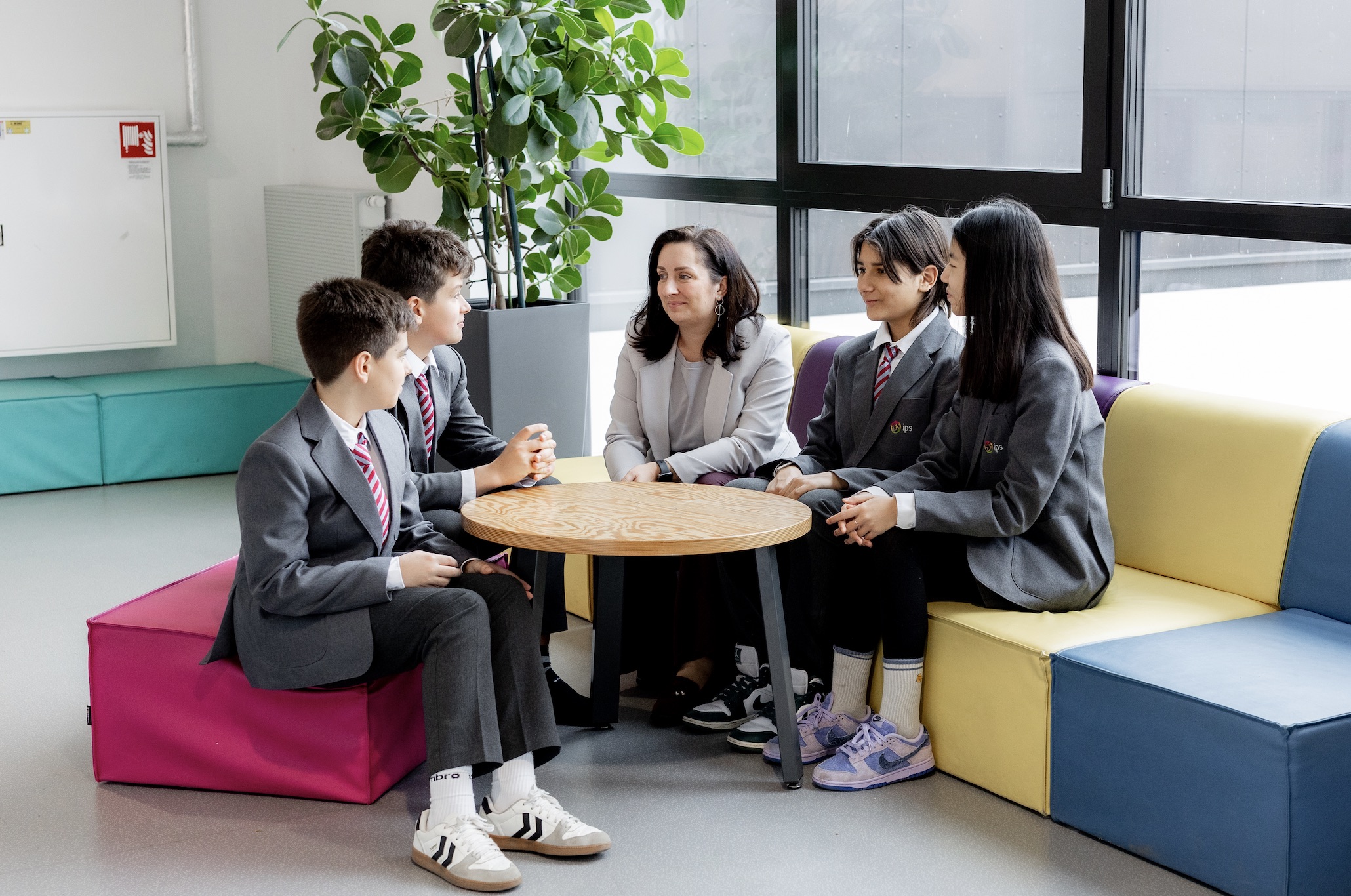
Counsellors and psychologists now lean on the platform whenever a student requests a check-in or is involved in an incident, instantly pulling up historic responses to evaluate where that student’s wellbeing history stands and identify any red flags in context. The school's principal uses the same data in parent meetings, pairing academic performance with a deeper, evidence-based view of each child's emotional and social wellbeing.
{{justify}}
The impact
With consistent data collection, IPS has been able to track individual students' wellbeing over time and design school-wide initiatives that align with what students are actually experiencing.
Rising, visible wellbeing trends:
When a student requests a check-in and a specialist follows up, staff can now see the trajectory, not just a single data point. "We can see that the child's trend is moving upwards, it's not staying flat." - Ruan van Niekerk, IPS Academic and Exam Prep Centre Manager
Student-led, evidence-based programming:
Komodo's data revealed sleep as the school's lowest-scoring wellbeing theme. In response, IPS ran a sleep hygiene workshop connected to digital wellbeing best practice developed collaboratively with Komodo's Customer Experience team, who helped shape ideas for getting students involved and sharing their own stories.
"The biggest impact that we could see in this is that it guides us to what the students would need, and it's not about what we think they need. It's what they show they need."
{{justify}}
Deeper, more honest engagement:
Because Komodo's questions are framed through a positive psychology lens, they're designed to emphasise strengths, resilience, and growth rather than weaknesses.
"The questions are set up in a way by the Komodo team that the students have the opportunity to express their feelings, and it doesn't feel like a direct question."
Faster, more informed support:
Historic response data means counsellors and psychologists no longer start from zero at each check-in or incident. They can immediately see a student's historical data, identify red flags, and act with far greater precision.

Conclusion
For IPS International School of Wrocław, Komodo Wellbeing has replaced a reactive, paper-based process with something the school had been searching for: a proactive system that surfaces need before it escalates. Komodo has given IPS's Student Support Team a live, historical view of every student it serves.
The result is a school-wide culture where decisions from a one-to-one counselling session to a whole-school sleep hygiene campaign are shaped by what students actually show they need, not assumptions. As Ruan and his team continue to build wellbeing literacy into everyday school life, Komodo remains the puzzle piece connecting student voice to meaningful, timely action.
{{HR}}
If you want to improve your wellbeing strategy, we want to help! With experience across 38 countries, we're here to provide you with insights that make a real impact.
{{CTA}}

